
No products in the cart.

What is Adenocarcinoma?
Adenocarcinoma is a type of cancer that begins in the glandular (gland-like) or secretory cells of the body.
These cells help produce or release mucus, digestive juices, and other fluids in the body.
Adenocarcinoma is not a cancer that occurs in one place. It can develop in different parts of the body, such as:
- Lungs
- Colon and Rectum
- Pancreas
- Stomach
- Breast
- Prostate
- Esophagus
- Some other organs
What happens inside the body?
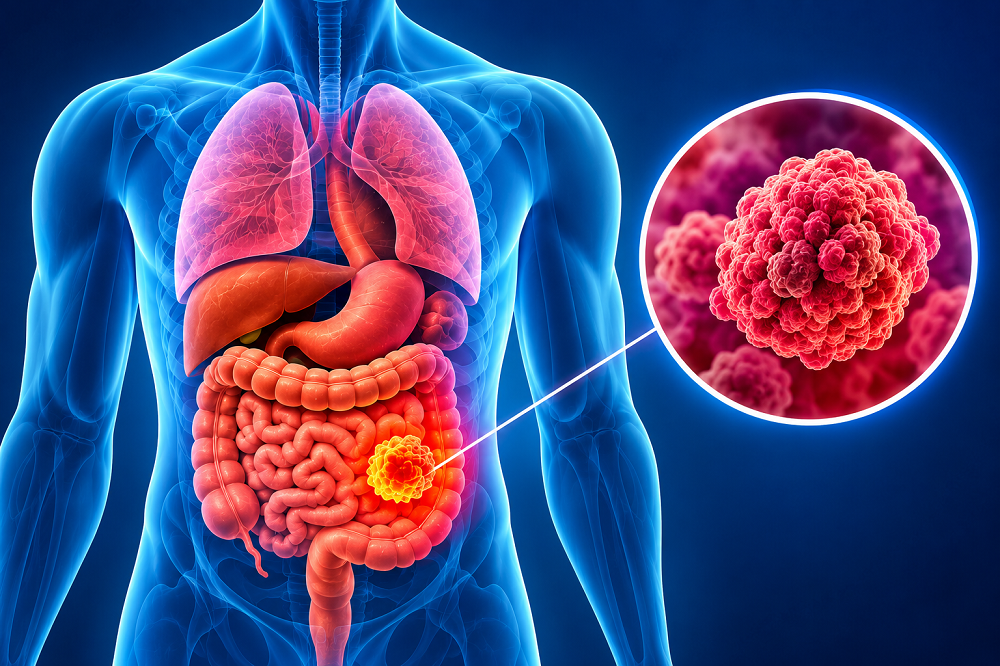 Adenocarcinoma
Normally, the cells of our body follow a certain rule:
Grows → Works → Gets old → Destroyed
And new cells are formed in their place.
But when changes (mutations) occur in a cell’s DNA that affect the mechanisms that control cell growth and division, the cell begins to grow and divide uncontrollably.
These abnormal cells can form tumors in the surrounding tissue.
Some cancers can spread to nearby tissues and can also metastasize to other parts of the body through the blood or lymphatic system .
Where can adenocarcinoma occur?
Adenocarcinoma behaves differently in different organs.
Lung Adenocarcinoma
Adenocarcinoma of the lungs is a common type of non-small cell lung cancer (NSCLC).
It may not cause any obvious symptoms initially.
Colorectal Adenocarcinoma
It can start in the lining of the colon or rectum.
Features include:
- blood Stool
- Changes in bowel habits
- Prolonged constipation or diarrhea
- Abdominal discomfort
- Unexplained weight loss
Can be seen.
Pancreatic Adenocarcinoma
It can start in the glandular cells of the pancreas.
Some patients initially have very few symptoms.
What are the symptoms of Adenocarcinoma?
Symptoms depend on which organ the cancer is in and how far it has progressed .
Commonly seen:
- Unexplained weight loss
- Constant fatigue
- Loss of appetite
- Constant or increasing pain
- Abnormal bleeding
- Long-lasting digestive symptoms
- Persistent cough or breathing problems
- Any tumor or swelling in the body
But all these symptoms are not necessarily caused by cancer.
What causes adenocarcinoma?
A single cause is not responsible for every patient.
Cancer usually develops from a combination of many genetic and environmental factors .
Risk factors differ depending on the type of cancer.
For some of them:
- Smoking
- Alcohol
- Obesity
- Age
- Family history
- Some inherited genetic conditions
- Some chronic inflammatory conditions
- Some infections
- Environmental exposures
May include.
How is Adenocarcinoma diagnosed?
Adenocarcinoma cannot be diagnosed based on symptoms alone.
As required by the doctor:
- Physical examination
- Blood tests
- Ultrasound
- CT scan
- MRI
- Endoscopy or other imaging/procedures
Can.
But a biopsy is often necessary to accurately identify the type of cancer .
In a biopsy, a small sample of abnormal tissue is taken and examined under a microscope.
What is the treatment for Adenocarcinoma?
Treatment depends on several factors:
- Where is Cancer?
- What is the stage of cancer?
- How big is the tumor?
- Has it spread to surrounding tissue or other organs?
- What molecular changes are there in cancer cells?
- How is the patient’s overall health?
Treatment may include:
- Surgery
- Chemotherapy
- Radiation therapy
- Targeted therapy
- Immunotherapy
- Or a combination of these treatments
There is not the same treatment for every adenocarcinoma.
Can Adenocarcinoma be cured?
The answer to this depends on the type, stage, and biology of the cancer .
Some adenocarcinomas, if found early and localized, may be curable with treatment.
If the cancer has spread to other parts of the body, the goal of treatment may be to control the cancer, slow its progression, and maintain the patient’s quality of life.
Therefore, early diagnosis and appropriate treatment are very important.
Bottom Line
Adenocarcinoma is a type of cancer that begins in glandular or secretory cells. It can occur in the lungs, colon, pancreas, stomach, breast, prostate, and other organs.
Its symptoms vary depending on the organ and there may be no symptoms initially.
If a person has unexplained weight loss, bleeding, persistent pain, persistent changes in bowel habits, or other unexplained symptoms for a long time, it is important to undergo a proper medical evaluation.
Disclaimer: This article is for health awareness purposes only and is not a substitute for medical diagnosis or treatment. If you suspect cancer or have any symptoms that persist for a long time, consult a qualified healthcare professional.

Publicpill