
- March 13, 2026
- Publicpill
- 0 Comments
- Women's Health, Health
Menopause- Why Strength Training Is Important?
Many women experience mixed emotions when they reach Menopause , but it is important to understand that this stage is not a disease or a problem. Menopause is a natural biological phase in a woman’s life that marks the end of the reproductive years. In many ways, it can be compared to the changes that happen during the teenage years, when the body first goes through hormonal development. Just as puberty brings new physical and emotional shifts, menopause is another normal transition where the body adjusts to a different hormonal balance.
During this time, the production of hormones like estrogen and progesterone gradually decreases, which may lead to symptoms such as hot flashes, night sweats, mood changes, and sleep disturbances. Although these changes can feel challenging, they are simply part of the body adapting to a new stage of life. With proper awareness, a healthy lifestyle, balanced nutrition, and supportive care, many women navigate this period comfortably and continue to maintain good overall health and well-being.
Menopause is an important transition in a woman’s life. It may bring certain uncomfortable symptoms, but with proper medical guidance and lifestyle care, these changes can be managed effectively. Doctors often help women understand their bodies during this stage so they can maintain good health and well-being. Menopause is not an illness—it is a natural phase of aging that millions of women experience every year.
This stage is confirmed when a woman has gone twelve months without a menstrual period. At that point, the reproductive cycle naturally ends, meaning pregnancy is no longer possible. Menopause marks the close of the childbearing years and generally occurs around the age of fifty, though the timing can vary from woman to woman. During this transition, the ovaries gradually stop releasing eggs, and hormone levels slowly change as the body adapts to a new balance.
Menopause And Strength Training
In 2026, strength training is no longer considered optional for women going through menopause. Health experts and doctors increasingly encourage women to include regular resistance exercises in their routine during this stage of life. Physical activity, especially muscle-building workouts, can support overall well-being and help the body stay strong while adjusting to the natural changes that come with aging.
During menopause, estrogen levels gradually decrease, which can affect muscle mass, bone density, and metabolism. Because of these hormonal changes, women may notice a loss of strength or an increased risk of bone weakness. Adding consistent resistance training—such as lifting weights or using body-weight exercises—can help maintain muscle strength, support bone health, and improve overall physical balance during the menopausal years.
| Topic | Key Information |
|---|---|
| What Is Menopause? | Menopause is a natural stage in a woman’s life when menstrual cycles stop and hormone levels gradually decline. |
| Why Strength Training Helps | Strength training supports muscle mass, boosts metabolism, and helps maintain overall physical health during menopause. |
| Bone Health | Weight-bearing exercises and resistance training can help strengthen bones and reduce the risk of osteoporosis. |
| Weight Management | Regular strength workouts help control body weight, improve metabolism, and prevent fat gain often seen during menopause. |
| Improved Mood | Exercise promotes the release of feel-good hormones, helping reduce stress, anxiety, and mood swings. |
| Better Balance | Strength training improves stability, coordination, and reduces the risk of falls, supporting safer movement as the body changes. |
This means the body may have a harder time keeping muscles and bones strong during this stage of life. As hormone levels shift, the natural support that once helped maintain strength and density slowly decreases, which can make the body feel weaker over time.
That is where strength training becomes especially valuable. Regular resistance exercises send a signal to the body to keep building and maintaining muscle and bone strength. By staying active and consistent with these workouts, women can support their overall health, improve stability, and help their bodies remain strong and resilient throughout the menopause transition. 💪
Why Strength Training Is Important During Menopause?
● The “Metabolic Engine”:
Our muscles play a major role in how the body burns energy. Muscle tissue is very active when it comes to calorie use, even when the body is at rest. When muscle mass starts to decrease, the body’s metabolism may slow down, which is one reason many women notice extra fat developing around the waist during menopause. This common change is often referred to as the “menopause middle.”
However, regular strength training can help maintain muscle mass and keep the body’s natural energy-burning process active. By preserving and building muscle, the body continues to burn calories more efficiently throughout the day. This helps keep the metabolic system functioning properly and supports a healthier balance during the menopause transition.
● Bone Reinforcement
Strength training, especially weight-lifting exercises, plays an important role in keeping bones strong and healthy. During menopause, bone density may begin to decrease, which increases the risk of fractures. Studies suggests that regular resistance workouts can support bone strength and may help reduce the chances of conditions like osteoporosis during this stage of life.
● Insulin Sensitivity
Hormonal changes during menopause can affect how the body handles sugar. Lower levels of estrogen and progesterone increases blood sugar balance, sometimes increasing the risk of insulin resistance or type 2 diabetes. Engaging in regular strength training sessions helps muscles use glucose more effectively, which supports better blood sugar control and overall metabolic health.
● Supporting Mental Well-Being
Physical activity, including strength training, improves blood circulation and releases feel-good hormones in the brain. This can help reduce feelings of stress, anxiety, and low mood that some women experience during menopause. Regular exercise also promotes better sleep and emotional balance, contributing to improved mental well-being.
● Site-Specific Protection
Another advantage of strength training is that it strengthens specific areas of the body that are more vulnerable during menopause, such as the hips, spine, and wrists. These areas are commonly affected by bone loss and fractures as women age. Targeted exercises help build muscle and support these joints, providing joint and bone support where the body needs it most.
Types Of Strength Training Exercises During Menopause

1. Multi-Joint Compound Lifts (The “Big Rocks”)
These exercises involve multiple muscle groups working together at the same time. They are highly effective for supporting metabolic health and improving bone strength, which becomes especially important during menopause. Because several muscles are activated in one movement, they also help build overall body strength.
Squats
Deadlifts with a kettlebell or barbell
Modified push-ups or chest press
2. Velocity Training (The “Fast” Moves)
These movements focus on controlled power and speed. They can help stimulate the bones and muscles in a different way, improving stamina and encouraging stronger skeletal support over time.
Kettlebell swings
Medicine ball slams
Box step-ups
3. Weight-Bearing Impact Training
These activities do not involve heavy lifting, but they still place healthy pressure on the bones through gravity and movement. This type of weight-bearing exercise helps support bone density and strengthens areas like the ankles and legs.
Stomping or marching
Jump squats
Skipping or jumping rope (helps strengthen the ankles and shins)
4. Unilateral (Single-Side) Training
These exercises focus on one side of the body at a time. This approach activates stabilizing muscles and helps improve balance, coordination, and muscle stability, which can become more important as the body changes with age.
Split squats or lunges
Single-arm rows
Single-leg stands
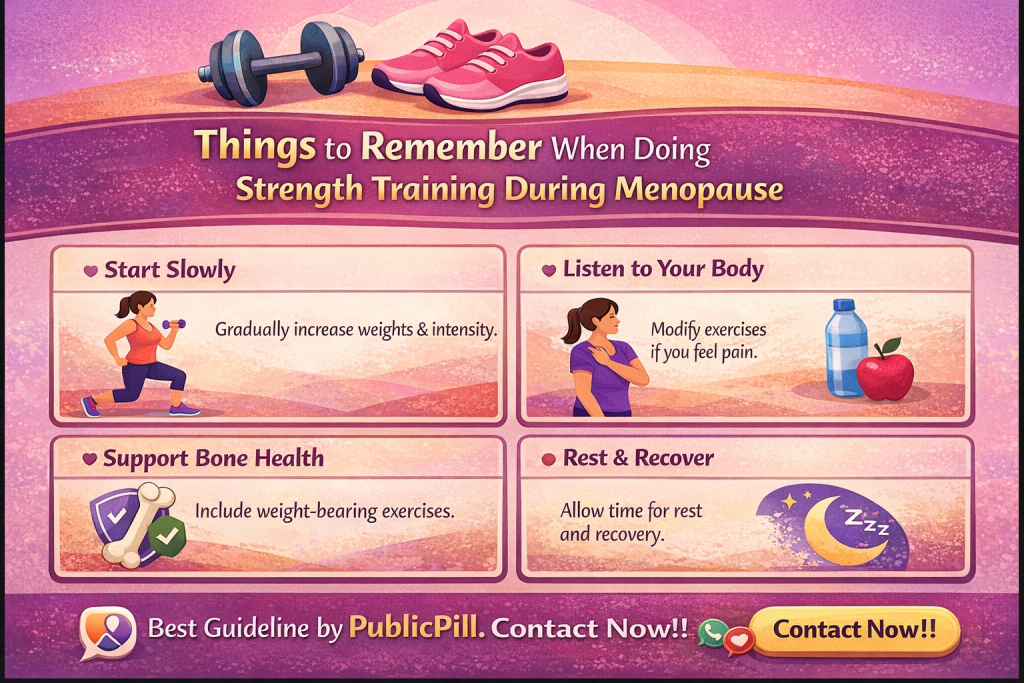
Things To Remember When Doing Strength Training During Menopause
When you step into the weight room—or even just use your living room for exercise during menopause—you are taking an important step toward a healthier life. Strength training and movement at this stage help support muscle strength, bone health, and hormonal balance.
However, it’s important to keep a few key things in mind to make your workouts safe and effective. Your exercise routine should protect your joints, target the right muscles, and promote hormonal well-being. By focusing on safe, well-designed workouts, you can ensure that every session not only strengthens your body but also supports your overall health during the menopause transition.
1. Prioritize “Progressive Overload”
To make your bones and muscles stronger, gradually increase the weight or intensity of your exercises over time. It’s not just movement that builds strength—your body adapts to progressive resistance, helping bones respond and grow stronger with each session.
2. The “Protein Window” is Non-Negotiable
After a workout, aim to eat 25–40 grams of protein within one to two hours. Protein supports muscle repair and recovery, which is especially important during menopause when lower estrogen levels can slow down this process. Think of protein as fuel for your muscles to rebuild and stay strong.
3. Manage Your Cortisol (The Stress Factor)
High-intensity exercise without proper rest can increase cortisol, the stress hormone, and may lead to overtraining. Balancing exercise with recovery is essential for avoiding fatigue and supporting hormonal health during menopause.
4. Don’t Skip the “Impact”
Low-impact activities like swimming are excellent for cardiovascular health, but they don’t provide enough bone-loading stimulus to strengthen bones. Include exercises that apply gentle impact or weight-bearing movements to support bone density.
5. Mind the Pelvic Floor
Always exhale when lifting weights and avoid holding your breath during squats or other core-focused exercises. Proper breathing protects the pelvic floor and reduces pressure that can cause discomfort or long-term issues.
6. Warm-Up and Mobility are Requirements
As estrogen decreases, tendons and ligaments can become stiffer, making injuries more likely. Spend 5–10 minutes on dynamic movements like arm circles, leg swings, or gentle stretches to improve mobility and prepare your body for safe and effective strength training.