
No products in the cart.
Pregnancy Virtual Care-A Time Saving Alternative
When a woman is Pregnancy, she can get care from her doctor without going to the clinic or doctor’s chamber. This is called care during pregnancy, or sometimes-virtual prenatal care or tele-OB. It Virtual care during pregnancy offers a convenient way for expectant mothers to access professional medical support right from the comfort of home. This hybrid approach isn’t designed to replace essential in-person clinic visits; instead, it creates a flexible, balanced schedule that blends remote consultations with physical checkups. By integrating virtual touch points, you can significantly reduce the number of commutes to the hospital while ensuring that both your health and your baby’s development remain under expert supervision.
Checklist Before Online Consultation Begins
To ensure a smooth and productive virtual visit, take 15 to 30 minutes before your video call to track your vitals at home. This step is crucial because it provides your healthcare provider with the same vital data they would typically gather during an in-person exam. By arriving at your screen with these measurements ready, you help maintain a high standard of care and allow for a more detailed discussion about your health and your baby’s progress.
| Take Your Vitals: | You need to check your blood pressure and weight and note it down. |
| Data Entry: | Once you have taken your measurements, simply input these numbers directly into your health app. This allows your medical provider to access your data in real-time, ensuring your digital health records are updated and ready for review during your virtual consultation. |
| Hydrate And Snack: | Make sure to have a light snack and drink plenty of water before your appointment to help ensure a successful fetal Doppler test. Staying well-hydrated and having a bit of natural glucose in your system can make it much easier for the device to pick up your baby’s heartbeat clearly during the session. |
| Lighting: | To get the best out of your virtual consultation, make sure your room is well-lit and that you are facing the light source. Proper lighting ensures that your doctors have a clear, high-quality view of you, making it much easier for them to assess your physical well-being and provide accurate medical guidance through the screen. |
| Privacy: | To ensure total privacy and a quiet environment, your bedroom is often the ideal spot in your house for setting up a virtual consultation with your doctor. Choosing a secluded space like this allows for an open, confidential conversation where you can discuss your health concerns comfortably and without any outside distractions. |
| Attire: | While there is no formal dress code for your virtual visit, it is best to wear comfortable, loose-fitting clothing. Choosing a relaxed outfit ensures you can easily roll up your sleeves when it is time to check your blood pressure or perform other self-monitored vitals required by your healthcare provider.Organize Your Information |
Your doctor will likely walk through the same standard questions they would during an in-office visit. To make the most of your time, have the following information ready:
Fetal Kick Counts: Recent data on your baby’s movement patterns.
Pharmacy Details: The name and location of your preferred pharmacy for any necessary prescriptions.
Recent Lab Results: Any findings from recent blood work or tests.
A List of Questions: Writing these down ensures you don’t forget anything in the moment.
It is also a great idea to jot down your Top 3 concerns on a piece of paper. Prioritizing these helps focus the conversation on what matters most to you.
Launching the Consultation
To start, you will log into the provided video link to establish a secure connection. The publicpill platform used for your visit is specifically designed to follow strict medical privacy regulations, ensuring that all your personal health information remains confidential and protected.
Ensuring a Good Connection
Once your internet provider connects the call, you will be able to see and hear your healthcare provider clearly. The experience is designed to feel just like an in-person conversation, allowing for a natural, face-to-face dialogue through your screen.
Virtual Consultation During Different Trimesters Of Pregnancy And Post Child Birth
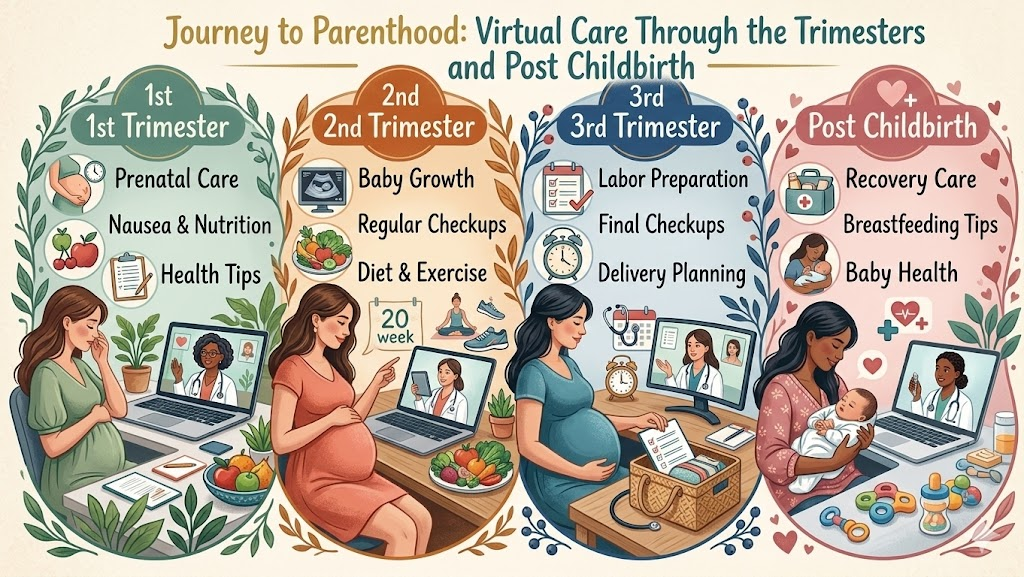
There is a standard timeline for using virtual care during pregnancy. This structured schedule dictates exactly how long you can utilize remote consultations and precisely when you need to return to the clinic for hands-on assistance. Pregnancy Virtual care operates within these set time limits to ensure that you eventually transition back to the office for necessary physical evaluations.
 Pregnancy Virtual Care- An Alternative That Saves Time
First & Second Trimesters Pregnancy (Weeks 8–28)
This period is often considered the ideal window for virtual care. Since these appointments focus heavily on patient education and routine symptom monitoring, they translate seamlessly to a video format.
- The Schedule: To stay on track, you will typically have a scheduled check-up every four weeks.
- The Split: In a hybrid model, every other visit is usually conducted virtually. For example, your 16-week and 24-week check-ups can often be handled remotely, while critical milestones like the 12-week and 20-week marks require an in-person visit for essential diagnostic tests and scans.
Early Third Trimester (Weeks 28–36)
As you enter the final stretch of your pregnancy, your medical team will likely increase the frequency of your check-ups to every two weeks. The third trimester is a critical phase for monitoring both your health and the baby’s development, which is why you will be seeing your doctor much more often during this time.
- The Schedule: Even with the increased frequency of appointments, it is often still possible to conduct a few of these bi-weekly visits virtually from the comfort of your home.
- The “Drop-off”: This is the time when your doctor will carefully check for signs of diabetes or preeclampsia in you. If you develop, diabetes or preeclampsia your virtual care “window” for gestational diabetes or preeclampsia may close early so that your doctor can keep a closer eye on you and give you more personal care, for gestational diabetes or preeclampsia.
The Last Few Weeks Of Pregnancy- Very Few Virtual Consultations
The use of virtual care typically decreases significantly once you reach the 36-week mark of your pregnancy. This shift occurs because healthcare providers must perform essential physical examinations and internal checks that cannot be conducted remotely. At this late stage, in-person visits are vital for your doctor to assess your physical readiness for labor and ensure the baby’s position is monitored accurately.
Virtual Care Options Post Childbirth
Once you have your baby, virtual care services typically become available again after a short interval, usually within one to two weeks. While these remote options are paused immediately following delivery to allow for initial physical recovery and hospital care, the virtual portal reopens quickly to support you during the early postpartum period.
Postpartum Virtual Care Overview
| Service | Purpose | Benefit |
| Postpartum Checkup | Monitor mother’s recovery | Early complication detection |
| Lactation Support | Breastfeeding guidance | Better feeding & comfort |
| Mental Health Care | Manage stress & mood changes | Emotional well-being |
| Pediatric Consultation | Baby health monitoring | Quick expert advice |
| Recovery Guidance | C-section or normal delivery care | Faster healing |
Benefits Of Virtual Care During Pregnancy
Early Detection of Complications:
By tracking your blood pressure and weight more frequently than the standard monthly visit, your doctor can quickly identify potential warning signs. For instance, a sudden spike in blood pressure can be an early indicator of preeclampsia, allowing for much faster medical intervention.
Reduced Infection Risk:
imiting the time spent in crowded clinic waiting rooms significantly lowers your exposure to illness. During the final months of pregnancy, the risk of contracting infections or developing allergies is higher, both of which can impact the health of the mother and the baby.
Zero Travel Time:
Virtual care is an ideal solution for those with long commutes, limited transportation options, or residents of rural areas. It eliminates the physical barriers to accessing high-quality maternal and neonatal care, ensuring geography doesn’t limit your support.