No products in the cart.
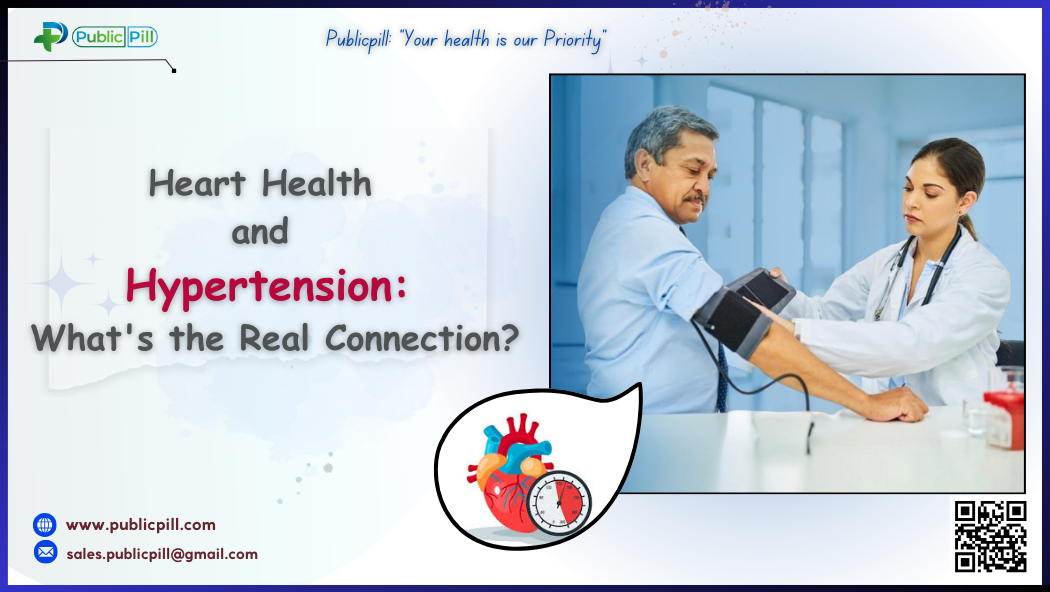
Heart Health and Hypertension: What’s the Real Connection?
Top sign to cure Hypertension
Hypertension, commonly known as high blood pressure, is a serious medical condition where the force of the blood against your artery walls is consistently too high. Over time, this elevated pressure can damage arteries and lead to significant health problems like heart disease, stroke, and kidney failure. It’s often called the “silent killer” because it usually has no symptoms, so many people don’t know they have it.
Hypertension is one of those disorders that silently kill us. In the present situation, estimates show that close to 10% of people in the US alone has high blood pressure. Sometimes, even though symptoms occur, it is neglected on behalf of the patient.
 Heart Health and Hypertension:
Around the world, hypertension is the most dreaded reason people have for having a heart attack or stroke. Even though there is no remedy possible for a permanent cure, diet, and lifestyle, changes can keep it under control and avoid major risks.
You can talk with the doctors about using Apresoline 25 mg when you have high blood pressure.
1. The Silent Killer With No Cure
Hypertension is indeed such a type of issue that does not have any side effects. Yes, people with high blood pressure may have chest pain often. However, this is not something that you can expect to have from day one.
As per studies, it has been found that chest pain usually only occurs in people who have been suffering from high blood pressure for many years, sometimes even decades.
2. Increases The Risk Of A Heart Attack Or Stroke
There is little doubt that without the right cure for hypertension, you are prone to having a heart attack or stroke. Studies show that as many as 60% patients have to end up with such an incident a few years down the line.
Even if you do not have a heart attack or stroke, you may have a critical heart disorder. After all these years of suffering, the blood vessels inside the heart are damaged, causing many lifetime issues. To get rid of this, you can use the Doxacard 4 mg.
3. Has Many Other Complications
One thing is for sure, that high blood pressure can have many outcomes in your body, you cannot even imagine.
| Blood Pressure Category | Top Number (Systolic BP) | And/or | Bottom Number (Diastolic BP) |
| Normal blood pressure | Less than 120 | and | Less than 80 |
| Elevated blood pressure | 120-129 | and | Less than 80 |
| Stage 1 hypertension | 130-139 | or | 80-89 |
| Stage 2 hypertension | 140 Or Higher | or | 90 Or Higher |
As per studies, it is highly damaging too many critical organs in the body, such as the brain, kidneys, and liver. Around the world, there are cases heard every year of patients having a brain stroke or a cerebral attack after suffering from hypertension for many years. It can also cause kidney or liver failure too, which are severe disorders themselves. Use the Doxacard 2 mg medicine to keep your BP under control.
4. Stress Has A Major Role To Play
Did you know that stress is one of the major reasons for having high blood pressure? An institute in the US studied high blood pressure in people under the age of 40. As per the results, close to 40% of those having high BP had stress.
It is not just stress that is to blame alone, but other mental health issues are equally responsible for this, such as stress or anxiety.
5. Use Of Medicines Can Help Reduce Symptoms And Avoid A Major Complication
You can commonly use medicines like Doxacard 1 mg with the help of a doctor guiding you, but it can only help manage the symptoms.
However, use of a medicine can at least keep your BP levels in check and prevent them from soaring even further. Thus, you also reduce the risk of having major complications in your life and the burden of additional disorders like vision damage or kidney problems.
6. May Be Present Right From Birth
Do you know that hypertension is a type of disorder that is congenital, that is present right from birth in some cases? When you go to the doctors, you must have seen why they probe into your family history, and in case any of your parents had the issue.
7. Highly Risky For Those Patients Who Are Suffering From Diabetes
Studies show that those people with a combination of metabolic issues like diabetes and high BP are at high risk. These are the people who can have major complications in their lives.
Often, the combination of high blood pressure along with high blood sugar can affect the nerves and the blood vessels of your body.
8. Controlled Diet Can Help Control Blood Pressure
Patients with high BP have to severely restrict their diet in so many ways to avoid a major risk later on in their lives. You have to get rid of high-carb, high fat, and high-calorie food items from your diet charts for your health and safety.
We suggest you move to a complete vegetarian diet, as most fish, meat, and eggs are rich in carbs and unhealthy fats. It seems that taking whole grains, cereals, red meat, and rice are some of the pretty bad food options for such patients, as per diet experts.
9. Exercises Are A Must
For anyone with high blood pressure, exercise should always be a part of their daily routine. Doing cardio, routines can help you to keep your heart muscles healthy and reduce BP slowly.
While you are probably already taking medicines such as Cipril H5 + 12.5 mg, do not rule out exercise from your life.
10. Stress And Anxiety Management Are Key
Stress and anxiety are factors that we have already explained above. Thus, managing your mental health is also a key to blood pressure control. Daily yoga and meditation are the key to avoiding bad mental health affecting your blood pressure levels.
Blood Pressure Readings
Blood pressure is measured in millimeters of mercury (mm Hg) and includes two numbers:
- Systolic pressure (top number): This measures the pressure in your arteries when your heart beats.
- Diastolic pressure (bottom number): This measures the pressure in your arteries between beats, when your heart is at rest.
Blood pressure is categorized as follows:
- Normal: Less than mm Hg
- Elevated: Systolic between mm Hg AND diastolic less than mm Hg
- Hypertension Stage 1: Systolic between mm Hg OR diastolic between mm Hg
- Hypertension Stage 2: Systolic at least mm Hg OR diastolic at least mm Hg
- Hypertensive Crisis: Systolic greater than mm Hg AND/OR diastolic greater than mm Hg. This is a medical emergency.
Types and Causes
There are two main types of hypertension:
- Primary (Essential) Hypertension: This is the most common type, and for most people, there’s no identifiable cause. It usually develops gradually over many years due to a combination of genetic factors and lifestyle choices.
- Secondary Hypertension: This type is caused by an underlying medical condition or medication. It tends to appear suddenly and can be more severe than primary hypertension. Causes can include:
- Kidney disease
- Adrenal gland tumors
- Thyroid problems
- Sleep apnea
- Certain medications (e.g., birth control pills, some cold medicines, NSAIDs)
Risk Factors
Some risk factors for hypertension are things you can’t change, while others are related to your lifestyle.
- Uncontrollable Factors:
- Age: Blood pressure tends to rise with age.
- Family History: High blood pressure often runs in families.
- Race: Black people are more likely to develop hypertension, often earlier in life.
- Gender: Before age 64, men are more likely to develop it; after 65, women are more likely.
- Controllable Factors:
- Obesity: The more you weigh, the more blood you need to supply your tissues.
- Diet: A diet high in sodium (salt) and low in potassium can increase blood pressure.
- Lack of physical activity: Being inactive can lead to weight gain and directly contributes to higher blood pressure.
- Tobacco and alcohol use: Smoking damages blood vessels, and excessive alcohol consumption can raise blood pressure.
- Stress: High levels of stress can temporarily increase blood pressure and lead to unhealthy coping behaviors.
Symptoms and Diagnosis
Since hypertension often has no symptoms, the only way to know if you have it is to get your blood pressure measured regularly by a healthcare professional. A diagnosis is usually based on the average of two or more readings taken on separate occasions.
- Severe headache
- Shortness of breath
- Nosebleeds
- Dizziness
- Chest or back pain
- Changes in vision
- Difficulty speaking
Treatment and Management
Treatment for hypertension typically involves a combination of lifestyle changes and, if necessary, medication.
- Lifestyle Changes:
- Diet: Adopt a heart-healthy diet, such as the DASH (Dietary Approaches to Stop Hypertension) diet, which emphasizes fruits, vegetables, and low-fat dairy while limiting saturated fats and sodium.
- Exercise: Get at least 30 minutes of moderate-intensity physical activity on most days of the week.
- Weight Management: Losing even a small amount of weight can significantly lower blood pressure.
- Limit Alcohol and Tobacco: Reduce alcohol intake and quit smoking.
- Stress Management: Practice relaxation techniques like meditation or yoga.
- Medications: If lifestyle changes aren’t enough, doctors may prescribe one or more medications, such as:
- Diuretics
- ACE inhibitors
- Angiotensin II receptor blockers (ARBs)
- Calcium channel blockers
- Beta-blockers
Complications
When left untreated, high blood pressure can lead to serious and life-threatening complications due to constant damage to the heart, brain, kidneys, and eyes.
- Heart Disease: Hypertension forces the heart to work harder, leading to thickened heart muscle and an increased risk of heart attack, heart failure, and coronary artery disease.
- Stroke: High blood pressure can cause arteries supplying the brain to narrow or burst, leading to a stroke.
- Kidney Disease: The tiny blood vessels in the kidneys can be damaged, impairing their ability to filter waste from the blood.
- Vision Loss: Damaged blood vessels in the eyes can lead to vision problems.
- Vascular Dementia: Reduced blood flow to the brain due to narrowed arteries can cause a decline in cognitive function and memory
FAQs
Q. What Is A Critical Hypertension Disorder?
It is the stage where your BP levels increase to more than 100/145 mg Hg.
Q. Can It Occur During Pregnancy?
As per studies, it has been found that females who are pregnant may develop hypertension during this time. It is common for around 15% females. Immediate remedy is necessary in such cases to avoid damage to the fetus.
Q. Where To Buy Medicines For Hypertension?
At publicpill, our online pharmacy has many generic brands of medicines at the best price that you can use and keep your BP levels under control.

Publicpill