
No products in the cart.
- May 21, 2026
- Publicpill
- 0 Comments
- Women's Health, Health
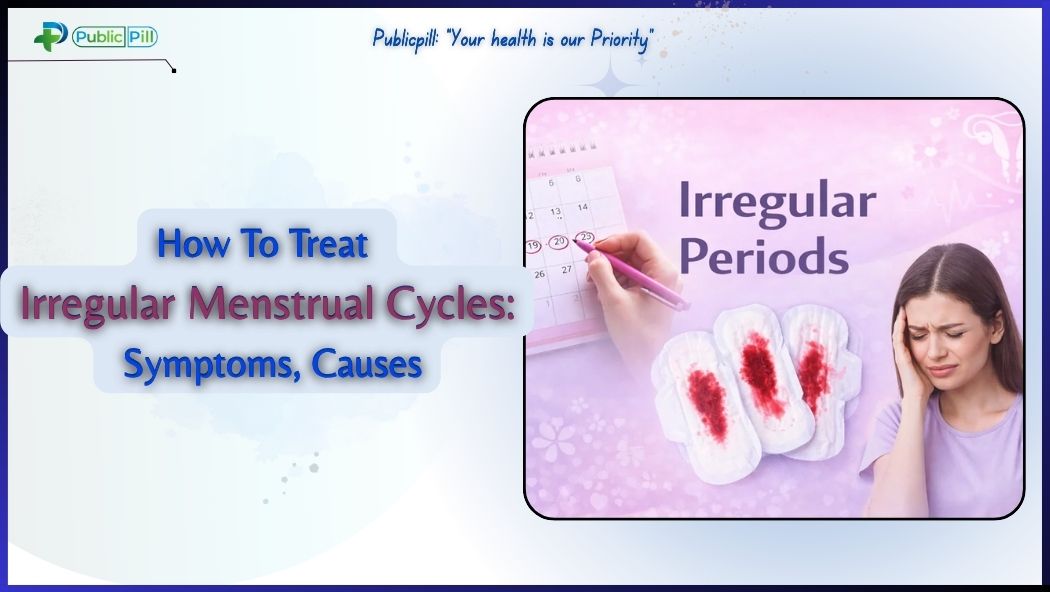
Irregular Menstrual Cycles: Symptoms, Causes, And Solutions
Although a normal menstrual cycle typically ranges from 21 to 35 days, with bleeding lasting 3 to 7 days, irregularities are quite common among women. This is a frequent concern in women’s health and may occur due to everyday lifestyle factors, stress, emotional challenges, or sometimes underlying medical conditions.
In this article, we will cover all the important information to help you understand both the minor and major factors associated with irregular menstrual cycles.
The Major Menstrual Symptoms:
The first thing you should understand about irregular menstrual cycles is their symptoms. According to studies, many women fail to recognize the signs in the early stages, and by the time the condition is identified, it may have already progressed and require proper medical treatment. Therefore, it is important to be aware of the common symptoms of an irregular menstrual cycle”:
| Symptom | Effect |
|---|---|
| Cramps | Pain in the lower abdomen |
| Bloating | Swelling or discomfort in the stomach |
| Headache | Pain or pressure in the head |
| Fatigue | Feeling extremely tired or low on energy |
| Mood Swings | Sudden emotional or behavioral changes |
Irregularity: A normal menstrual cycle generally ranges from 21 to 35 days from the first day of your last period. If the cycle extends beyond 35 days, it is considered irregular. In many cases, women may initially notice cycles occurring in less than 21 days, followed by longer gaps exceeding 35 days. Such inconsistent patterns are important signs of menstrual irregularity and should not be ignored.
Missing Periods: If you miss your periods continuously for 3 to 4 months, it is considered a sign of menstrual irregularity. The first step is usually to check for pregnancy. If the pregnancy test is negative and your periods still do not return, it is important to consult a doctor for proper evaluation and treatment.
Changes in Menstrual Flow: If you notice that your menstrual flow is inconsistent, it may indicate an underlying irregularity. For example, the bleeding may be very heavy at one time, suddenly become very light, and then return to a heavy flow again the next day. If such changes continue for 2 to 3 consecutive menstrual cycles, it is advisable to consult a doctor. Additionally, if your periods last for more than 7 days, it is considered unusual and should be medically evaluated.
Intermenstrual Bleeding: If you experience bleeding between your menstrual cycles or notice spotting after sexual intercourse, it may be a sign of menstrual irregularity or an underlying health issue. Such symptoms should not be ignored, and it is important to consult a doctor for proper diagnosis and treatment before the condition becomes more serious.
Some Additional Signs and Symptoms: Apart from the major symptoms, there are several other associated signs that may sometimes indicate problematic or irregular Menstrual Cycles, including.
- Severe pain in the pelvic region.
- Sudden or excessive hair growth on the face and body.
- Heavy blood loss accompanied by extreme weakness or fatigue.
- Intense mood swings, stress, or anxiety.
- Difficulty conceiving despite regular attempts during menstrual cycles.
If you experience any of these symptoms regularly, it is important to consult a doctor and undergo proper medical diagnosis and evaluation.
Major Medical Causes:
Once you recognize that you may be experiencing irregular menstrual cycles, the next important step is understanding the possible causes behind them. These causes can be both physical and emotional in nature.
It is important to understand these factors carefully because, in some cases, your menstrual cycle may not yet be completely irregular, but certain lifestyle habits or health conditions could eventually lead to irregularities.
Therefore, let us explore the major causes responsible for irregular menstrual cycles.
PCOS (Polycystic Ovary Syndrome): PCOS is one of the most common causes of irregular menstrual cycles. In this condition, the levels of male hormones, known as androgens, increase in the body. This hormonal imbalance interferes with the normal development and release of eggs from the ovaries, often leading to delayed or missed periods and longer gaps between menstrual cycles.
Thyroid (TSH) Issues: An overactive or underactive thyroid can disrupt hormone balance in the body, which may affect menstrual cycles and lead to irregular periods or changes in menstrual flow.
Fibroids: Fibroids are non-cancerous growths that develop inside the uterus. They can cause heavy bleeding, painful periods, and irregular menstrual cycles.
POI (Primary Ovarian Insufficiency): POI is a relatively rare condition caused by severe hormonal imbalance, where the ovaries stop functioning properly before the usual age. Women with POI may frequently experience skipped or irregular periods.
Bacterial Infections: Untreated bacterial infections in the pelvic region can affect reproductive health and may lead to irregular periods, pelvic pain, and discomfort.
Endometriosis: In endometriosis, tissue similar to the uterine lining grows outside the uterus. This condition can cause severe pelvic pain, heavy bleeding, and several menstrual irregularities.
Lifestyle-Related Factors: Certain lifestyle habits and general health conditions can also affect menstrual cycles and contribute to irregular periods, including:
- Being overweight or experiencing sudden weight changes
- Excessive stress or emotional pressure
- Intense or heavy exercise routines
- Use of steroids or blood-thinning medications
⚠️ Warning:
If your periods stop for more than 3 months, it is important to consult a doctor and also rule out pregnancy through proper medical evaluation.
Available Treatments:
Now that you understand the signs of irregular menstrual cycles and the possible causes behind them, it is important to learn about the available treatment options. Early diagnosis and timely treatment can often help prevent the condition from becoming more serious. Therefore, let us look at the common treatments used for irregular menstrual cycles:
Treating Thyroid Imbalance:
If irregular menstrual cycles are caused by thyroid problems, proper treatment for the thyroid condition can help restore hormonal balance and regulate periods.
Fertility and Hormonal Medications:
Certain medications, such as Birth control pills, progesterone therapy, and metformin for PCOS, may help regulate menstrual cycles and improve hormonal balance.
Treatment for Fibroids:
If fibroids are responsible for heavy or irregular bleeding, medical procedures such as myomectomy or endometrial ablation may be recommended, depending on the severity of the condition.
Lifestyle and Health Management:
Maintaining a healthy weight, reducing stress, following a balanced diet, and engaging in mild regular exercise can significantly help in managing irregular menstrual cycles naturally.
The Final Line:
Irregular menstrual cycles are a very common concern in women’s health. If left untreated, they can affect fertility, hormonal balance, and overall quality of life. Therefore, it is important to identify the condition early, seek proper medical guidance, and begin appropriate treatment as soon as possible.
This article should help you understand the basic signs and causes of irregular menstrual cycles. If you notice any symptoms or irregularities, it is important to consult a doctor promptly for proper diagnosis and timely treatment.
FAQs
Can I Face Issues With My Menstrual Cycles At A Young Age?
Irregular menstrual cycles are more commonly observed in women between the ages of 30 and 40. However, in recent years, such issues have become increasingly common among younger women, including teenagers and women in their early 20s.
Q. How Long Does It Take To Correct Irregular Menstrual Cycles?
If the condition is diagnosed and treated at an early stage, menstrual cycles may become regular within 2 to 3 cycles. However, conditions such as PCOS, hormonal imbalances, or fibroids may require longer treatment and management, sometimes taking several months or more than a year.
Q. Will I Need Surgery for Irregular Menstrual Cycles?
Surgery is required only in rare cases. It is usually recommended when conditions such as fibroids become severe or cannot be managed effectively through medications and other treatments.
Tags:

Publicpill
Owner
Publicpill is an online pharmacy designed to make purchasing medicines and healthcare products convenient, affordable, and accessible. With a user-friendly platform, it serves as a one-stop solution for all health and wellness needs.