
No products in the cart.
Testicular Torsion: How To Prevent It
The male reproductive system is a delicate, finely-tuned network where even minor physical trauma can cause lasting damage. Often, this “mishandling” occurs unknowingly, leading to serious conditions like Testicular Torsion. While many men fear Erectile Dysfunction, ED is actually an indirect side effect of this condition. The direct impact of Testicular Torsion on men’s sexual health is far more dangerous, potentially leading to permanent organ damage if not treated immediately.
When dealing with issues beyond Erectile Dysfunction (ED), standard treatments like Cenforce 150mg or Fildena 100mg may provide temporary aid for potency, but they do not address the underlying structural or biological damage. In cases of Testicular Torsion, the primary concern shifts from impotency to male infertility, as the blood supply to sperm-producing tissues is compromised. Because the situation involves complex risks to your long-term reproductive health, a detailed breakdown of the clinical aspects is essential for clarity.
What Is Testicular Torsion?
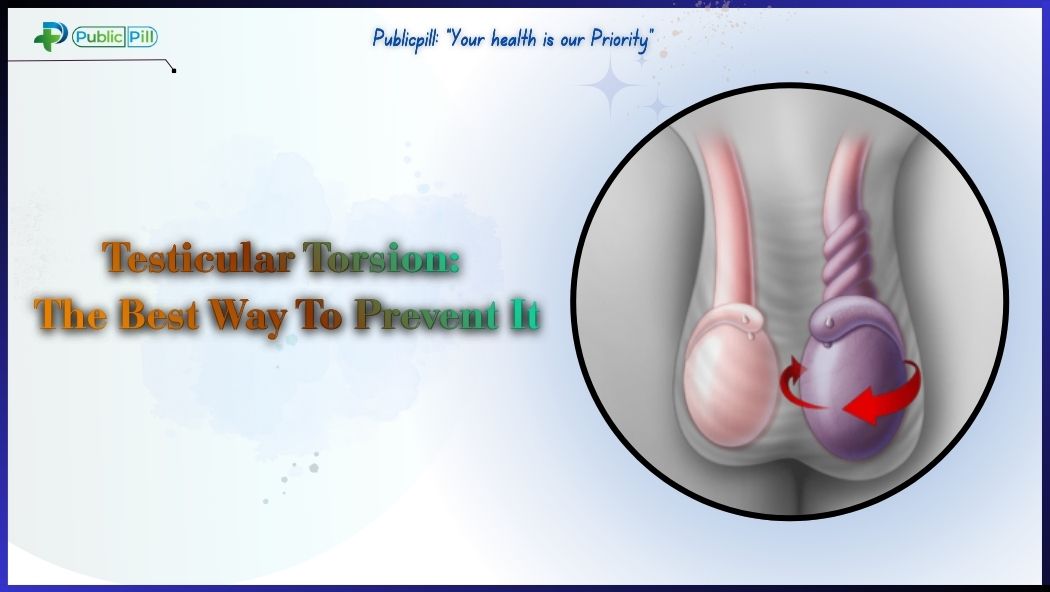
Testicular Torsion is not a chronic disorder, but a critical medical emergency that can lead to permanent male infertility. This emergency condition occurs when the spermatic cord twists, cutting off essential blood flow to the testicles. Because the risk of permanent damage is so high, understanding the urgency of this condition is vital for protecting reproductive health.
As the spermatic cord twists, the vital blood supply to the testicles is completely cut off. Without a constant flow of oxygenated blood, the Testicular Torsion tissue begins to suffer rapid and irreversible damage. This lack of circulation is a medical emergency that can lead to permanent organ failure, resulting in lifelong male infertility.
If a testicle is severely damaged by Testicular Torsion, immediate surgery is required to remove the organ. Failing to act quickly can lead to complications that affect the healthy testicle as well, potentially resulting in permanent male infertility. This medical emergency requires surgical intervention to prevent total reproductive system failure.
Permanent damage to the testicles means the body loses its primary source for producing testosterone levels. This hormonal depletion does far more than just disrupt your sex life; it strips away core masculine attributes, including physical power and vitality. Without these natural levels, maintaining your overall strength and well-being becomes an impossible challenge.
To prevent severe physical decline, identifying scrotal torsion early is the only way to ensure rapid medical intervention. When blood flow is blocked, the resulting drop in essential hormones can lead to a significant loss of skeletal density and muscle integrity. In extreme cases, this systemic failure can even result in long-term immobility or paralysis. Fast action is the only defense against these life-altering complications, making it vital to spot the warning signs before permanent damage occurs.
Critical Symptoms
Detecting the signs of acute scrotal torsion early is the only way to save the organ and protect your hormone production. Unlike common aches, the discomfort here is sharp, sudden, and localized in the pelvic region or testicles.

Watch for these specific physical changes that signal a
Intense Localized Pain: You will feel a sudden, agonizing sensation in the scrotum or prostate area. This is not a dull ache; it is sharp and debilitating.
Visible Inflammation: The scrotum often swells rapidly and becomes extremely sensitive to the slightest touch.
Abdominal Distress: The pain frequently radiates to the lower stomach, often accompanied by persistent nausea and bouts of severe vomiting.
Asymmetrical Displacement: You may notice one testicle has shifted significantly higher than the other, appearing as if it is sitting on top of its pair.
Discoloration: The skin around the affected area will turn a vivid red or even a deep, dark hue as the condition worsens over time.
How Much Chance Is There For A Salvage?
Unlike standard issues that respond to medications like Vidalista 60 or Cenforce 100, this condition cannot be resolved with a pill. Success depends entirely on your speed of action; the longer you wait, the lower the likelihood of saving the organ. Immediate surgical intervention is the only way to restore blood flow and prevent permanent loss. To ensure the best possible outcome, you must understand the critical windows for recovery:
Within 6 Hours: This is the “golden window” where the chance of saving the testicle is approximately 90% to 100%.
12 Hours Later: The success rate drops significantly to about 50%, as tissue death begins to accelerate.
After 24 Hours: The probability of salvage falls to less than 10%, making surgical removal of the damaged tissue almost certain.
Causes Of Testicular torsions
Understanding the causes and clinical path for this condition is vital for early prevention. Here is a breakdown of why this happens and how medical professionals address it.
Common Causes and Risk Factors
Congenital Predisposition: Many men are born with an anatomical defect where the testicles aren’t securely attached to the scrotum (often called the “bell clapper” deformity). This lack of stability allows the organs to rotate freely, eventually leading to a twist.
Adolescence and Hormones: Rapid growth and hormonal shifts during puberty—specifically between the ages of 12 and 18—increase the risk. This is the most common age group for spontaneous cases.
Physical Triggers: Sudden torsion can be triggered by minor trauma to the pelvic region. This might occur during sports, vigorous activities like masturbation, or even simply due to a bad posture while sleeping.
Diagnosis and Surgical Intervention
To confirm the condition, doctors typically perform a scrotal ultrasound (USG). This imaging allows them to observe the rate of blood circulation and the physical state of the spermatic cord.
Once diagnosed, the standard medical response is a surgical procedure known as Orchiopexy:
Detorsion: The surgeon manually untwists the spermatic cord to restore immediate blood flow.
Securing the Organ: The affected testicle is stitched to the internal wall of the scrotum to prevent it from ever twisting again.
Proactive Prevention: Often, the surgeon will stitch the healthy testicle as well, as the underlying birth defect usually exists on both sides.
FAQs
Q. How Essential Is The Surgery?
Surgery is the only definitive treatment for this condition. The procedure focuses on untwisting the spermatic cord to restore blood flow, followed by stitching one or both testicles to the scrotum to prevent future episodes. If manual manipulation successfully untwists the cord and stabilizes the area, your doctor will evaluate if further surgical fixation is necessary to ensure the condition does not return.
Q. How Is The Diagnosis Conducted?
Diagnosis is typically confirmed via scrotal ultrasonography. This imaging allows doctors to visualize the twisted spermatic cord and assess the physical condition of the testicles. The USG results determine the extent of the damage and confirm whether surgical stitching is required to stabilize the organs.
Q. Who Usually Finds The Anomaly?
The anomaly is not restricted to any age. However, most of the patients having such an issue have had the anomaly from childhood, or between the ages of 12 and 18. In some cases of injury in the Men’s Pelvic region, men can face such issues too.
Q. What Are The Risks Of The Torsion?
Untreated testicular torsion can lead to significant long-term health complications, including chronic erectile dysfunction and a permanent drop in testosterone production. Because the testicles are the primary site for generating semen and sperm, any lasting damage can result in both impotency and male infertility. Protecting these organs is essential for maintaining both sexual performance and reproductive capacity.
Q. How To Identify The Issue?
Testicular torsion triggers agonizing pain that often begins in the lower abdomen before localizing. This discomfort is typically accompanied by rapid scrotal swelling and intense redness. Because the pain is acute and severe, recognizing these sudden inflammatory signs is critical for seeking immediate medical help.
Q. How Fast Should I Treat The Condition?
To prevent permanent male infertility and erectile dysfunction, treatment must occur within a strict 6-hour window from the onset of pain. Delaying intervention beyond 12 hours significantly raises the risk of impotence. If the condition remains untreated for 24 hours, the likelihood of saving the organ is minimal, leading to severe, life-altering complications for your physical and reproductive health.

Publicpill